
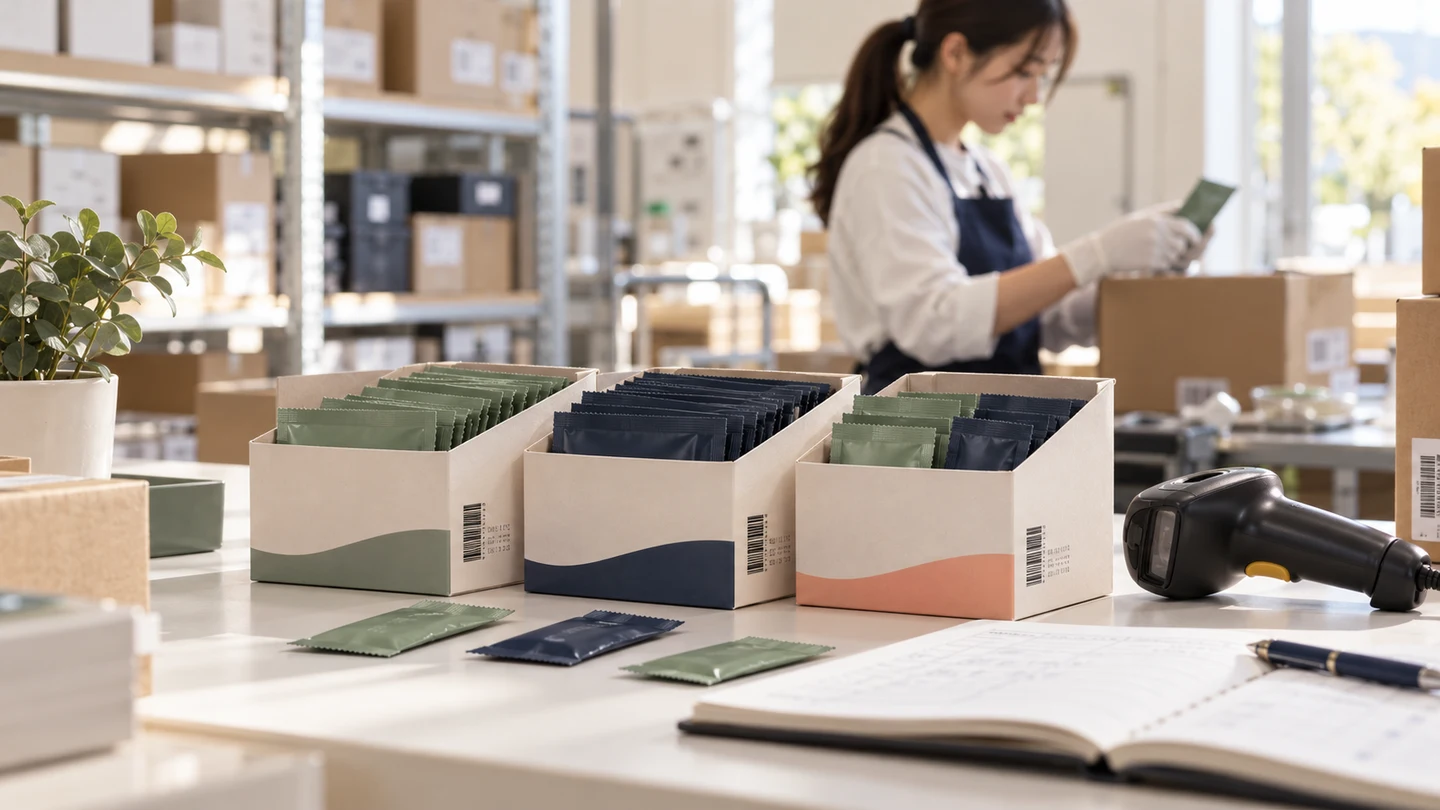
A useful lot code connects a pet oral film sachet to its production records and shipment history. Before approving a private label supplier, ask the team to demonstrate that connection with a mock recall, including a reconciliation of shipped and unshipped stock.
Follow one sachet back to its inputs
Start with the item an owner could still have after throwing away the retail box. Can its identifier lead the brand to the finished batch, relevant ingredient lots and packaging records? FDA's animal food business guidance describes receipt and distribution records, including source information for ingredients used in each finished lot. For covered US animal food records, the page gives a one-year retention period. That is not a universal retention policy for every document or destination. A buyer should agree a retention schedule that also considers shelf life, complaints and applicable market rules. In a supplier review, request a redacted demonstration using one actual identifier; other customers' confidential information is unnecessary. Then test the reverse direction: if one ingredient lot were affected, which finished film lots and customers would need review? A folder of certificates cannot answer that operational question. FDA: starting an animal food business, receipt and distribution records.
Reconcile quantities in a practice exercise
A mock recall tests whether the records can account for the affected stock. Use a clearly marked exercise so distributors do not mistake it for a real safety notice. Consider a hypothetical batch of 10,000 boxes: 6,000 shipped, 3,800 still in warehouse and 200 documented as retained, sampled or destroyed. The total reconciles to 10,000 only if those categories are mutually exclusive and supported by records. This arithmetic is an example, not a HYTANBIO production result. Ask for shipment dates and recipients for the distributed quantity, and identify any distributor that split cases or relabeled cartons. An unresolved difference deserves investigation even when it is small. Record when the exercise began, when records were retrieved and who checked the reconciliation. Set improvement targets from the exercise findings rather than publishing an untested claim about recall speed.
Assign decisions before a real complaint arrives
Separate the people who receive complaints from those authorized to assess a safety signal and stop distribution. The US preventive-controls rule requires a written recall plan for animal food with a hazard requiring a preventive control, subject to the rule's applicability. The plan covers consignee notification, public notification when appropriate, effectiveness checks and disposition of recalled food. Confirm the requirements that apply to the specific facility and product with the responsible compliance team. For the commercial agreement, name the brand and manufacturer contacts, a backup contact and the records each party must supply. Include how photographs of lot codes and unopened samples will be handled. A mock recall should finish with assigned corrective actions, such as fixing unreadable print or closing a missing distributor record. Keep the exercise report distinct from evidence that a real recall was completed. FDA: Guidance for Industry #245, animal food hazard analysis and preventive controls.
Buyer checklist
- Verify the relationship between sachet, carton and shipping identifiers.
- Trace a finished batch backward and an ingredient lot forward.
- Reconcile distributed, held and otherwise accounted-for quantities.
- Check the contact list and the authority to stop shipment.
- Record exercise findings and completion of corrective actions.
Questions buyers ask
Is a barcode enough for batch traceability?
A barcode is useful only if its data resolves to the right records. A product-level barcode may identify the SKU without identifying the production lot.
Is an expiry date the same as a lot code?
Not necessarily. Several batches can share an expiry date. The coding system must distinguish the records needed for the investigation.
How fast must every mock recall be completed?
This article sets no universal time limit. Agree a documented exercise target based on the applicable requirements, distribution model and risk, then record actual performance.
Does a successful exercise prove the product is safe?
No. It demonstrates aspects of traceability and response readiness. Product safety still depends on the formulation, hazards, manufacturing controls and supporting evidence.
References and scope
Sources checked on 30 October 2026. This supplier-authored guide supports project discussions; it is not an independent clinical review or a market authorization. Suggested exercises and numerical examples are not HYTANBIO batch results. The editorial image was generated for this guide. For questions or corrections, contact info@hytanbio.com.
- FDA: starting an animal food business, receipt and distribution records
- FDA: Guidance for Industry #245, animal food hazard analysis and preventive controls