
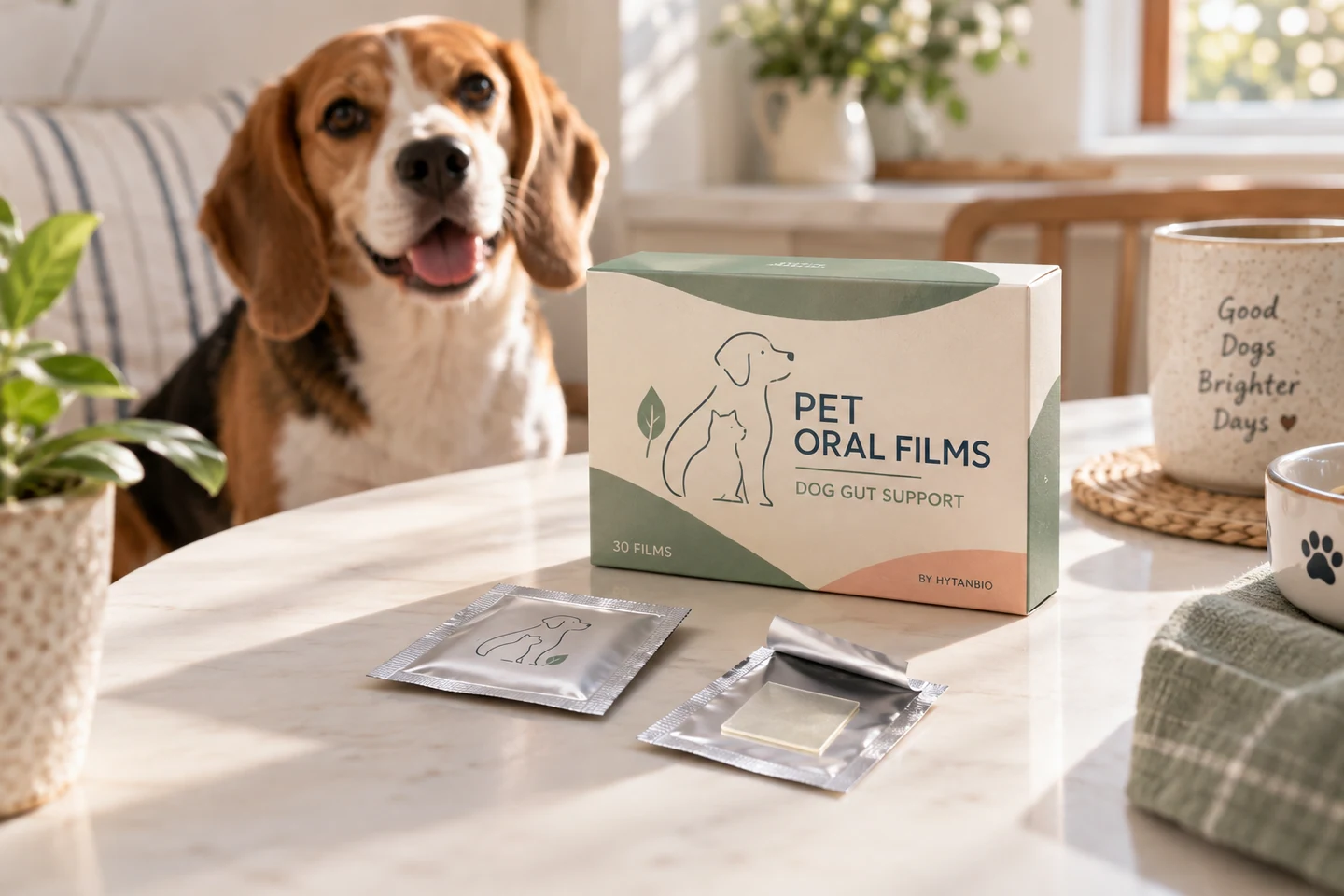
Development overview: A dog digestive-support concept that prioritizes meaningful serving and repeatable production. A trace quantity added for label appeal is not an adequate development goal.
- Typical film: 2 × 2 cm
- Maximum film: 2 × 3.5 cm, subject to feasibility
- Pack: 20 or 30 strips per box
- MOQ, formulation and delivery: quoted by project
Ingredients and formula feasibility
A probiotic direction requires strain identity, a justified target count at end of shelf life and process-survival testing. A prebiotic direction requires a meaningful intake calculation. Heat, moisture and the small film mass can make an otherwise attractive digestive brief infeasible. A dog digestive-support concept that prioritizes meaningful serving and repeatable production. A trace quantity added for label appeal is not an adequate development goal. The formulation team reviews the ingredient form, supplier specification, analytical method, odor, color and interaction with the film-forming system before preparing a prototype. Candidate amounts are deliberately left open until a suitable serving has been assessed for the intended animal and market. A printed ingredient name does not establish a meaningful amount or an effective finished product. Sample approval should record what was tested, what remains provisional and which changes would require another review. If the target load cannot be accommodated without poor handling or unacceptable taste, the team should revise the concept or recommend a different delivery format.
Features and packaging specification
Dog Gut Support Oral Films is a configurable OEM development concept for dogs. Its practical advantage is a compact, individually protected format that can be integrated into a private-label range. The common film footprint is 2 × 2 cm, with a current maximum of 2 × 3.5 cm subject to formula feasibility. Standard cartons contain 20 or 30 strips; these pack counts do not establish a daily feeding schedule. Assess film flexibility, handling, disintegration, appearance and sachet opening as one system. A product-specific storage and stability programme is needed before assigning shelf life or refrigeration instructions. Avoid generic promises of instant action, superior absorption or universal animal acceptance. The approved specification should connect the exact formula, film dimensions, primary barrier pack, printed carton and batch release criteria so repeat orders remain comparable.
Applications and claim boundaries
Digestive routine support must be separated from treating diarrhea, vomiting, colitis or obstruction. These symptoms can have serious causes. Hairball language also needs care: a tiny film should not imply the same functional bulk as a conventional fiber product. A dog digestive-support concept that prioritizes meaningful serving and repeatable production. A trace quantity added for label appeal is not an adequate development goal. Buyers should define the intended user, selling channel and evidence needed for the proposed language before selecting front-of-pack wording. A category name is a useful starting point for a commercial conversation, but it is not evidence that a particular formula works. Dog and cat suitability must be established separately where relevant, and senior or growth-stage products need explicit life-stage consideration. Health conditions, ongoing medication and unusual reactions should be referred to a veterinarian. The development file should distinguish the consumer use scenario from a measured product outcome and retain the basis for any final statement. This helps the brand create useful educational content without turning a nutritional concept into an unsupported medical claim.
Customization and project quotation
Begin a dog gut support oral films enquiry with the target country, species, intended benefit, preferred ingredients and exclusions. Add the expected first order, desired launch window, flavor direction and a choice of 20 or 30 strips per carton. A platform-based private-label route may suit a focused launch; custom ODM work is appropriate when the brief requires a new formula, sensory profile or packaging system. MOQ, sample cost and timing are quoted against that scope rather than promised as universal numbers. The review identifies feasibility questions, test requirements, documentation and approval responsibilities before a commercial commitment. Buyers can provide artwork or request packaging coordination after formula and mandatory label text are stable. Final ingredient amounts, use directions and acceptance limits belong in the signed specification, with changes documented before production.
Explore private label and ODM options, quality documentation and packaging systems.
Read the technical guide for this product family.