
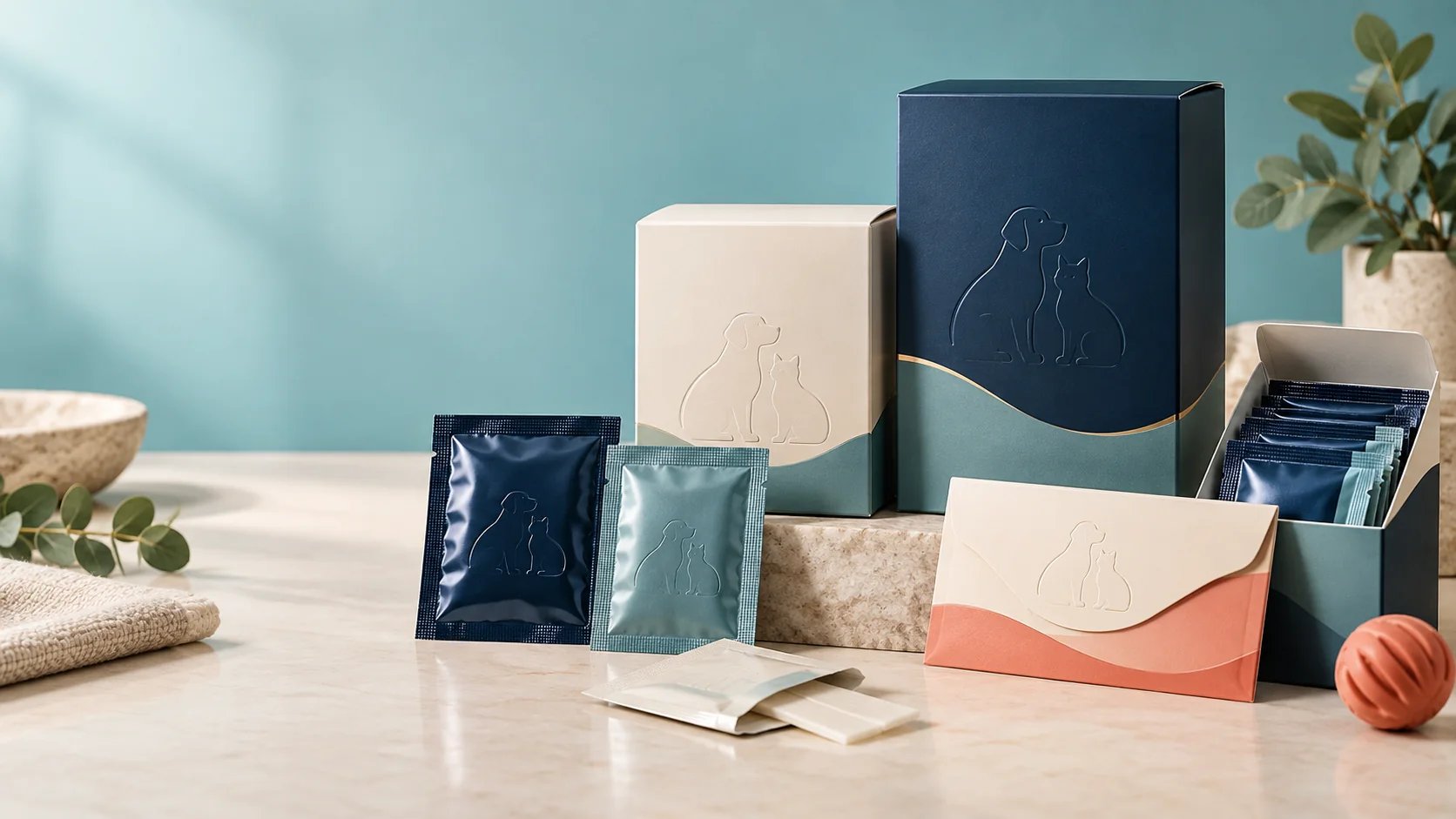
Answer: Shelf life applies to a specified formula in a specified package under stated conditions. No universal expiry period or refrigeration rule can be assigned to all pet oral films.
Connect each expiry claim to a stability protocol
The protocol should identify the formulation, process, sachet structure, storage conditions, time points and acceptance limits before testing begins. Relevant endpoints can include appearance, handling, moisture-related behavior, disintegration, microbiological quality and ingredient-specific assays, depending on the product. The appropriate tests follow the risks and claims of the finished concept. A few attractive samples or a generic competitor expiry date do not establish a shelf life. Keep accelerated observations distinct from the final rationale supporting the labeled period, and record the limits of any prediction. The buyer should know who reviews the data and who approves the storage wording. If a significant formula, packaging or process change occurs, assess whether the existing evidence still applies instead of carrying the same date forward automatically.
Explain practical storage without inventing conditions
The final label should tell users how to handle unopened sachets and what to do after opening, using instructions supported by the actual product. Until those instructions are approved, the website should describe storage as specification-dependent. Buyers should also discuss realistic export and retail conditions so packaging trials reflect the route to market. Transit exposure, seal integrity and the condition of the carton can all be relevant to a complaint investigation. Include batch and expiry coding in artwork proofs and confirm that codes remain readable on the chosen material. A useful procurement checklist asks for the stability summary, the approved storage statement and the version of the primary pack used in testing. This makes the evidence traceable to the goods eventually supplied rather than to an unrelated development sample.
- Typical size: 2 × 2 cm
- Maximum: 2 × 3.5 cm, subject to feasibility
- Cartons: 20 or 30 strips
- Formula, MOQ, shelf life and lead time: confirmed by project
Next: explore product concepts, compare development routes or send a project brief.