
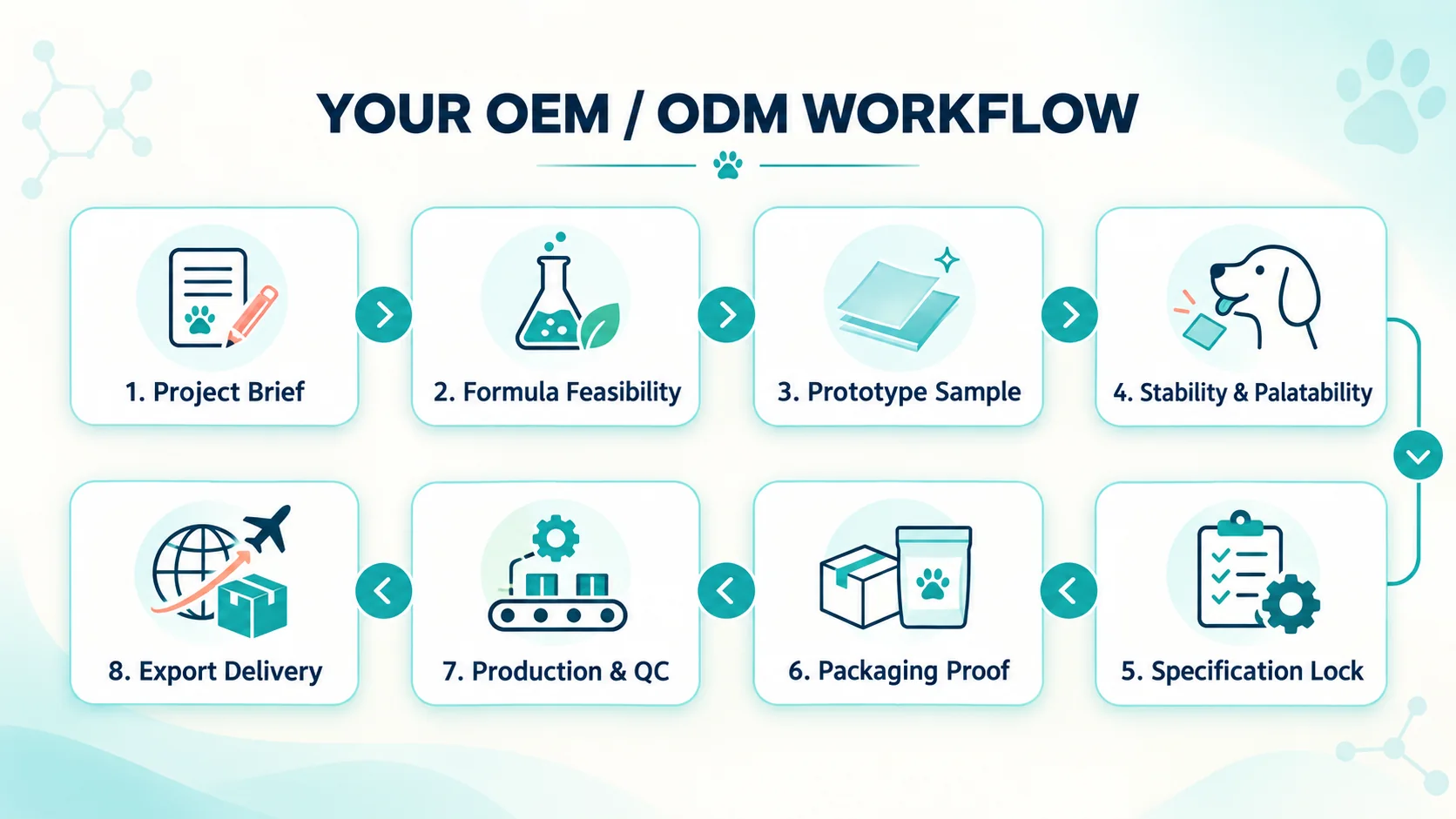
Answer: Private label starts from an available technical platform; custom ODM starts from a differentiated brief. Confirm what is actually established before choosing the faster route.
Choose the route by the decisions still open
A private-label project can adapt agreed features of an existing platform, such as flavor direction, carton count and artwork. It still needs destination-market and species review. Custom ODM may require a new ingredient combination, serving target, sensory profile or pack architecture and therefore additional feasibility work. Ask which exact formulation and process have been demonstrated, what evidence can be shared and which changes would create a new development project. A ready-formula catalogue should not be mistaken for immediate approval in every country. If the commercial goal is a focused launch, reduce the number of simultaneous variables. If differentiation is essential, budget for prototype iterations and testing rather than expecting a stock-product timetable. The route should follow the technical gaps in the brief, not simply the name printed on the quotation.
Define ownership and approval responsibilities
Before development begins, clarify sample scope, deliverables, confidentiality, formula ownership, artwork responsibility and what happens when requirements change. Commercial and legal terms belong in an agreed project document. The operational workflow should identify who approves the formula, specification, label text, primary material and print proof. Keep a versioned decision record so the final product can be traced to the approved prototype rather than an informal email preference. Separate development charges and one-time print or tooling costs from recurring unit prices. If a target country changes, reopen the relevant ingredient and label review before production. These details help a brand compare suppliers on the same basis and reduce avoidable rework. The website enquiry can start the process with a non-confidential outline; detailed intellectual property should follow an appropriate confidentiality arrangement.
- Typical size: 2 × 2 cm
- Maximum: 2 × 3.5 cm, subject to feasibility
- Cartons: 20 or 30 strips
- Formula, MOQ, shelf life and lead time: confirmed by project
Next: explore product concepts, compare development routes or send a project brief.