
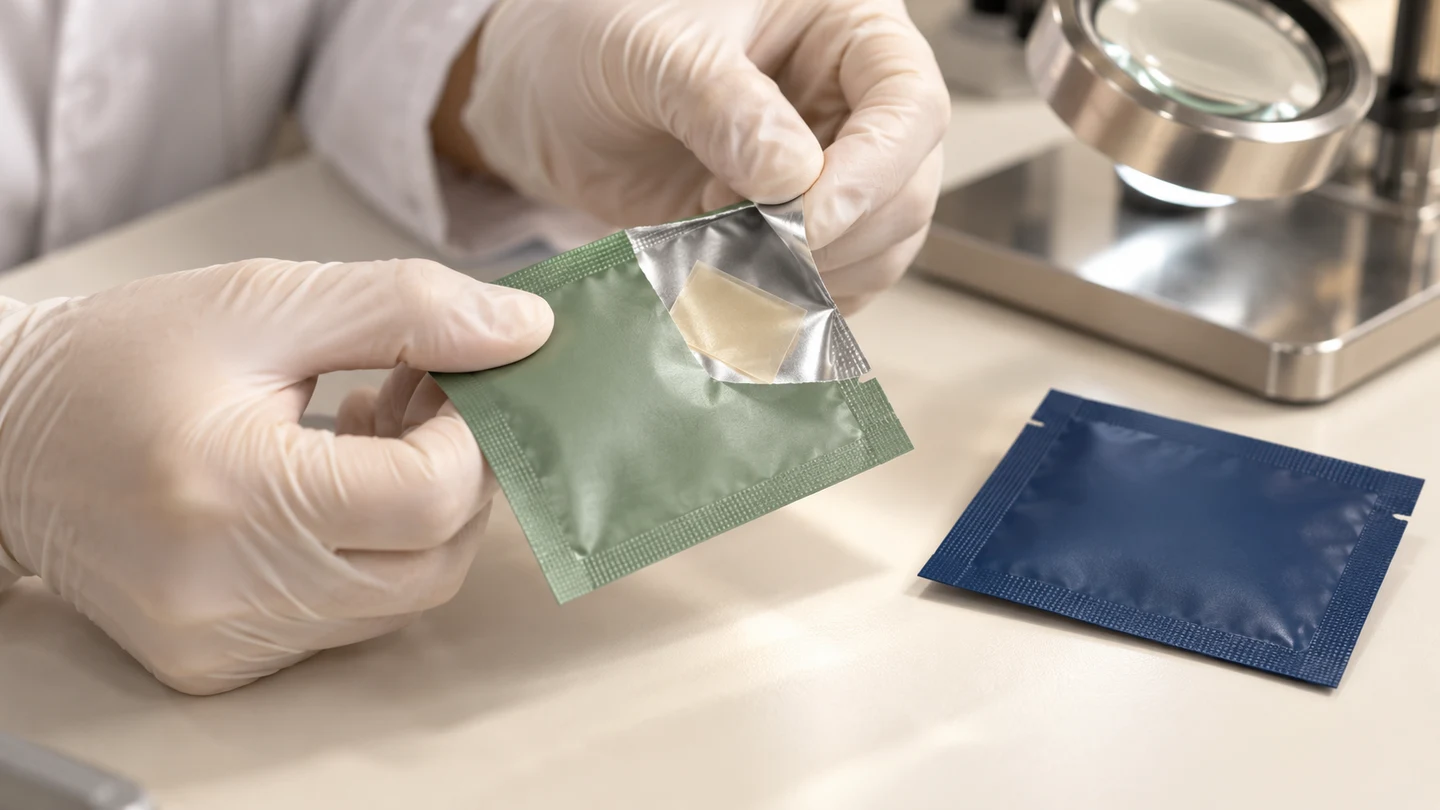
Assess the finished pet oral film sachet with separate questions about seal strength, leakage and opening. A barrier-material data sheet alone cannot establish how the filled pack performs. Agree the test methods and acceptance criteria for the actual laminate and sealing process.
Give strength and leakage separate acceptance criteria
Seal strength describes the force involved in separating a sealed specimen under a stated test method. ASTM F88/F88M addresses this measurement and the way the specimen fails. Leakage asks whether a route exists through the package or its seal. A strong result on one strip cut from a pouch does not establish that every corner of the pouch is closed. For a buyer's specification, list each question separately and ask the laboratory which method can answer it for the proposed materials. Record the laminate structure, specimen location and conditioning history so repeat tests can be compared. Also distinguish the sealing material supplier's data from results on the filled sachet. The latter includes the effects of the actual packaging operation. Ask for individual observations and photographs of unusual failures, rather than relying on a single pass stamp without a defined criterion. ASTM F88/F88M-23: seal strength of flexible barrier materials.
Interpret a dye test within its scope
ASTM F3039 describes dye-penetration methods for nonporous packaging and flexible barrier materials. Its published scope distinguishes Method A for edge-seal channels equivalent to those formed by a 50 micrometre wire from Method B for holes of 10 micrometres or more in flat sheet material. Those figures describe the methods' stated scope; they are not acceptable defect sizes for a pet oral film pack. The standard describes qualitative, destructive tests, so tested samples cannot return to saleable stock. Have the laboratory confirm that the selected method suits an opaque foil sachet, its seals and the intended failure mode. A negative finding means no leak was detected under that method's conditions. It does not establish that every possible defect is absent. Keep the test report with the sample identification and the method edition used, including any departures from the procedure. ASTM F3039-23: dye penetration for nonporous packaging.
Check the pack after handling and at opening
Plan checks on packages that represent the intended shipping and storage conditions, not only pristine sachets taken directly from the sealing line. The development team should define the conditioning and handling sequence with the packaging laboratory, then examine damage and repeat the relevant tests. As a separate usability exercise, open the pack using its printed instructions and record whether the film can be removed intact. A tear notch that works on an empty demonstration pouch may behave differently beside a thin, fragile product. Note where the film sits relative to the seal and whether the user needs to touch it repeatedly. These are proposed development observations, not claims of validated HYTANBIO test results. Resolve the findings before approving the final pack and its instructions. Keep the product's stability data linked to the packaging revision used in that study.
Buyer checklist
- Specify the laminate revision and filled-sachet configuration.
- Set separate strength, leakage and usability criteria.
- Choose a method appropriate to porous or nonporous material.
- Record conditioning, specimen locations and individual failures.
- Quarantine destructive-test samples and verify opening instructions.
Questions buyers ask
Does high peel strength mean a sachet cannot leak?
No. Strength and leakage are different measurements. A local channel or other defect can remain outside the tested specimen. Evaluate the relevant failure modes separately.
Is ASTM F3039 a shelf-life test?
No. It addresses dye detection of leaks in the specified materials. Shelf-life support requires evidence for the finished formulation in its intended packaging over the proposed storage period.
What seal-strength value should every oral film pack meet?
This article does not set a universal value. The laminate, opening method, distribution conditions and product needs should inform an agreed, justified criterion.
Can we sell sachets used for dye testing?
No. The cited dye-penetration methods are destructive. Exposed samples must be segregated from product intended for sale.
References and scope
Sources checked on 30 October 2026. This supplier-authored guide supports project discussions; it is not an independent clinical review or a market authorization. Suggested exercises and numerical examples are not HYTANBIO batch results. The editorial image was generated for this guide. For questions or corrections, contact info@hytanbio.com.
- ASTM F88/F88M-23: seal strength of flexible barrier materials
- ASTM F3039-23: dye penetration for nonporous packaging